REVIEWS
Adult patients with congenital heart disease (ACHD) remain a poorly studied group in terms of arrhythmological complications, while at the same time representing one of the most actively investigated cohorts with arrhythmias today. Patients with a systemic right ventricle (sRV) after atrial switch operations or with congenitally corrected transposition of the great arteries are the most vulnerable subgroups in the congenital heart disease (CHD) population; however, specific criteria for sudden cardiac death (SCD) risk stratification in these patients are still lacking. This review summarizes current knowledge on the incidence and mechanisms of SCD, including the role of arrhythmogenic substrate, myocardial fibrosis, anatomical and physiological characteristics of the sRV, and the systemic atrioventricular valve. Data from national and international registries are presented, as well as recommendations for rhythm monitoring and detection of life-threatening arrhythmias, along with the latest risk stratification scores developed specifically for patients with sRV. The need for prolonged rhythm surveillance, refinement of indications for implantable cardioverter-defibrillators in primary prevention, and further research with registry data collection to optimize management strategies is emphasized.
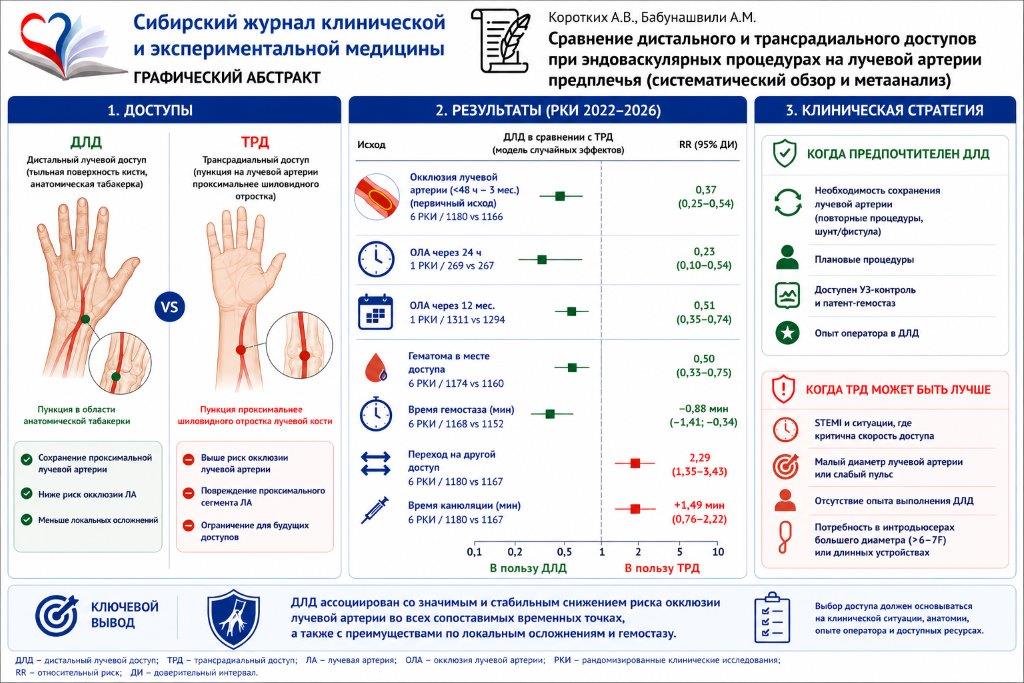
The distal radial access (DRA) in the anatomical snuffbox area is considered as a modification of the transradial access (TRA), potentially reducing the incidence of radial artery occlusion (RAO) and local complications, while preserving the proximal radial artery (RA) segment for future interventions.
Aim: To evaluate the efficacy and safety of DRA compared with conventional TRA for endovascular procedures based on current randomized clinical trials (RCTs) and meta-analyses (2022–2026), with a focused quantitative synthesis of randomized evidence and a narrative overview of other procedural setting.
Methods. PubMed/MEDLINE, Web of Science Core Collection, Google Scholar, and eLIBRARY (including manual search of reference lists) were searched using PRISMA 2020 from January 1, 2022, to February 1, 2026. Only meta-analyses and prospective RCTs were included; Retrospective studies, case-control designs, and clinical cases were excluded. The primary outcome was RAO (by assessment time), secondary outcomes were technical access success, access change (crossover), local complications, hemostasis time, operator radiation exposure, and ergonomics. A sensitivity analysis was performed at ≤ 48 hours (at discharge) and 30–90 days.
Results. Nine RCTs (only coronary procedures) were included in the quantitative synthesis of RAO. In the subgroup of comparable timing (48 hours / 30 days / 60 days / 1 month / 3 months; k = 6), DRA reduced the risk of LA: RR = 0.37 (95% CI 0.25–0.54), I² = 0%. A risk reduction was also found for RAO at 24 hours (k = 1). 12-month data are presented in the TENDERA RCT. Sensitivity analysis stratified by the time of RAO assessment showed consistent results.
Conclusions. According to RCTs and meta-analyses, DRA is associated with a reduction in RAO and several local complication/ hemostasis benefits in 2022–2026. However, it often requires crossover and longer cannulation times during the development phase. The “protective effect” of DRA on the radial artery remains stable over different observation periods. Practical implications: DRA is appropriate for patients where preserving the proximal radial artery is important (repeated interventions, potential bypass/fistula), provided experience and patent hemostasis and/or ultrasound-guided protocols are available.
Introduction. Atrial fibrillation (AF) is the most common cardiac arrhythmia, occurring in 2–4% of the adult population. Among patients with ST-elevation myocardial infarction (STEMI), the incidence of new-onset atrial fibrillation (NOAF) ranges from 4 to 28%. The development of NOAF after percutaneous coronary intervention (PCI) in STEMI patients is associated with an increased risk of hospital mortality and adverse long-term outcomes.
Aim: To assess the prognostic performance of existing risk stratification tools for predicting NOAF in STEMI patients after PCI.
Methods. A literature search was conducted following the PRISMA guidelines. Data from international databases, including PubMed, Web of Science, and others, published between 2020 and 2025, were analyzed. Studies addressing the prediction of NOAF developing during hospitalization in STEMI patients after PCI were included. A total of 23 articles were selected for the final analysis.
Results and Discussion. The reported incidence of NOAF in STEMI patients after PCI ranged from 2.3% to 17%, indicating substantial variability. The occurrence of NOAF was associated with increased in-hospital mortality, which was 2–3 times higher in patients with arrhythmia. The predictive accuracy of existing risk scores not originally designed to assess NOAF risk (including CHA2DS2-VASc, HATCH, POAF, etc.) was insufficient, with AUC < 0.7. In contrast, most NOAF prediction models developed specifically in STEMI cohorts undergoing PCI demonstrated higher discriminative ability (AUC: 0.758–0.839). This superior performance may be explained by the inclusion of predictors reflecting systemic inflammatory response, metabolic and nutritional status, which indirectly characterize the severity of ischemic injury, myocardial remodeling, and neurohumoral imbalance associated with an increased risk of NOAF.
Pollution of atmospheric air with particulate matter (PM) is a pressing global problem. The review highlights current understanding of the role of air pollution with PM in the pathogenesis of comorbidity. For this purpose, materials from articles indexed in the PubMed and eLIBRARY.RU databases were used. The results of the influence of PM depending on their size, chemical composition, and concentration in the air on the occurrence and progression of comorbid diseases are considered. PM with an aerodynamic diameter of ≤ 2.5 μm are recognized as the most dangerous. Epidemiological and experimental studies have established a dose-dependent effect of PM on cells. Oxidative stress, damage to the cell genome, and epigenetic changes under the influence of PM are an important link in the pathogenesis of comorbidity. Systematization of scientific results through a formalized description contributes to understanding the pathogenesis of comorbidity and facilitates the use of these results in practical medicine to assess the risk of occurrence, early diagnosis, prognosis, improve the effectiveness of treatment of patients, and develop preventive measures.
Relevance. For six decades, in reconstructing the right ventricular outflow tract, the choice of conduit has been – and remains – a challenge for cardiac surgeons. Among the vast number of available valve prostheses, the choice of material is still debated. Various allografts, xenografts, combinations of Dacron tube grafts with an incorporated occlusive element made of biological tissue, and mechanical materials exist. Synthetic prostheses with handcrafted valves made of expanded polytetrafluoroethylene (ePTFE) and bioresorbable tissue-engineered conduits are gaining popularity. The ongoing search for the optimal conduit is driven by unsatisfactory long-term outcomes of prosthetic function. The main issue is the in-evitable biodegradation of the material from which the prosthesis is made. Durability is the most important indicator of conduit quality.
Aim: To review conduits used for right ventricular outflow tract reconstruction based on an analysis of published literature.
Methods. A search for studies was conducted using the Medline (PubMed) and the Russian Science Citation Index (RSCI) databases with search queries, keywords, and logical operators.
Results. Based on a systematic literature review, aspects of conduit selection for implantation in the pulmonary position were examined, and the main complications as well as early and long-term postoperative outcomes are presented.
Conclusion. The choice of conduit for right ventricular outflow tract reconstruction remains a key factor determining the effectiveness of surgical treatment and long-term outcomes in patients of different age groups. Promising directions include the development and implementation of new biological and synthetic conduits capable of providing better long-term results and increasing the durability of the reconstruction.
CLINICAL STUDIES
Introduction. Heart failure with preserved ejection fraction (HFpEF) is characterized by a high comorbidity. Iron deficiency (ID) is one of the most common comorbidities in HFpEF, the frequency of which can reach 80% [3]. There is insufficient data on the efficacy, appropriateness, and long-term outcomes of intravenous iron therapy in this patient cohort, underscoring the relevance of research in this area.
Aim: To evaluate the dynamics of the clinical presentation, quality of life (QoL) and functional status (FS), as well as laboratory parameters of iron metabolism in patients with HFpEF during a prospective one-year follow-up after correction of ID by using intravenous ferric carboxymaltose therapy.
Material and Methods. The study included 58 patients with HFpEF and ID. The median age of the patients was 67 [65; 73] years; 65.5% of them were women (n = 38). ID correction using intravenous iron therapy was performed in 23 patients (group 1). Patients who were not given the drug to correct ID were included in the control group 2 (n = 35). Baseline and 6-, 12-month, an intragroup and intergroup analysis of the laboratory parameters of ID, the clinical picture of HFpEF, indicators of FS was performed the 6-minute walk test (6MWT) and QoL using the Minnesota Living with Heart Failure Questionnaire (MHLFQ) and the nonspecific SF-36 quality of life questionnaire. Additionally, a subgroup of patients with latent ID was analyzed in relation to the studied parameters (n = 49).
Results. After 6 months in group 1, there was a decrease in the frequency of symptoms such as increased fatigue (p = 0.002), more than half of the patients noted a subjective improvement in exercise tolerance (p < 0.001), which was confirmed by an increase in the distance traveled in 6MWT (p = 0.002), an improvement in MHFLQ results (p < 0.001), indicators of physical functioning (p < 0.001) and general perception of health (p = 0.003) according to the SF-36 questionnaire. In the subgroup with latent ID, the revealed differences persisted with respect to distance in 6MWT (p = 0.042) and tended towards quality of life according to MHFLQ (p = 0.068). The revealed differences persisted after 12 months. Correlation analysis revealed that a more pronounced positive dynamics of the studied parameters was observed with a lower initial ferritin level: for the 6MWT dynamics, the correlation coefficient was r = –0.775 (p = 0.001), for the MHFLQ indicators – r = 0.625 (p = 0.006).
Conclusion. In patients with HFpEF, intravenous correction of concomitant ID, including latent ID, has a positive effect on FS and QoL, which persists for 1 year after ferrotherapy. At the same time, the effect is more pronounced the lower the initial ferritin values, which confirms the need for active detection of ID in a cohort of patients with HFpEF by determining not only a general clinical blood test, but also indicators of iron metabolism. At the same time, the issue of finding optimal markers and criteria for ID in patients with HFpEF remains open and requires further research.
Introduction. Aortic root pathology requiring surgical correction with aortic valve replacement remains one of the most challenging problems in modern cardiac surgery, particularly in young and middle-aged patients. The Ross procedure and aortic homograft implantation are recognized biological methods of aortic root reconstruction, each with specific advantages and limitations. At the same time, the choice of the optimal surgical strategy in many cases is largely based on the individual experience of the surgeon, while objective, formalized decision-making criteria remain insufficiently defined.
Aim: To evaluate the factors influencing the choice between the Ross procedure and aortic homograft implantation in aortic root surgery and to develop a surgical decision-making algorithm based on regression analysis.
Material and Methods. A single-center retrospective comparative study included 43 patients with aortic root pathology who underwent full-root aortic replacement between 2015 and 2025. An aortic homograft was implanted in 19 patients (Group I), and the Ross procedure was performed in 24 patients (Group II). Men accounted for 86.0% (n = 37). The mean age was 49.8 ± 13.6 years, body mass index (BMI) was 26.4 ± 4.0 kg/m², and body surface area (BSA) was 1.95 ± 0.17 m². The mean follow-up duration was 58.2 ± 13.9 months in Group I and 74.9 ± 11.3 months in Group II. All patients underwent serial echocardiography preoperatively, in the early postoperative period, and during follow-up. Primary endpoints were overall survival and freedom from reoperation. Secondary endpoints included structural graft degeneration, aortic root/autograft dilatation, aortic regurgitation ≥ grade II, and thromboembolic and hemorrhagic complications. Statistical analysis was performed using IBM SPSS STATISTICS 26.0.
Results. The groups did not differ significantly in age (51.3 ± 15.2 vs 48.6 ± 12.3 years; p > 0.05), BMI (25.8 ± 4.2 vs 26.7 ± 3.8 kg/m²), or BSA (1.94 ± 0.18 vs 1.96 ± 0.16 m²). In the aortic homograft group, infective endocarditis (36.9% vs 4.2%; p = 0.007), previous cardiac surgery (36.8% vs 8.3%; p = 0.024), and connective tissue dysplasia (26.3% vs 4.2%; p = 0.040) were more frequent. In-hospital mortality was 4.7% (n = 2) and occurred only in Group I; no deaths were recorded in Group II. Overall mid-term survival was 90.9%. No reoperations were required in Group I; in Group II, two reoperations (8.3%) were performed at 80 and 96 months. During follow-up, the maximum transaortic flow velocity increased from 118 ± 10 to 126 ± 11 cm/s in Group I (p = 0,006) and from 141 ± 18 to 146 ± 19 cm/s in Group II (p = 0.242). No significant aortic regurgitation ≥ grade II was observed. Age was identified as an independent predictor of graft dysfunction progression: for aortic homografts, AUC = 0.795 with a threshold of 61.5 years (sensitivity 62.5%, specificity 90.9%; p = 0.032); for the Ross procedure, AUC = 0.976 with a threshold of 49,5 years (sensitivity 100%, specificity 85.7%; p = 0.001). Additional risk factors included increased left ventricular myocardial mass (270 ± 90 vs 211 ± 48 g; p = 0.044) and myocardial ischemic time ≥ 130 minutes (AUC = 0.864; p = 0.008).
Conclusion. Age is a key independent predictor of graft dysfunction. In patients with aortic homografts, an increased risk of dysfunction progression is associated with younger age (< 61.5 years), whereas after the Ross procedure an unfavorable prognosis is observed in patients older than 49.5 years. These findings highlight the fundamental importance of age-oriented selection of the aortic root reconstruction method to optimize mid-term outcomes.
Background. Chronic ischemic heart disease (IHD) is characterized by progressive myocardial remodeling caused by the combined effects of persistent ischemia and hemodynamic overload. Sustained activation of the sympathetic nervous system leads to alterations in β-adrenergic signaling, which may influence both the extent and spatial distribution of myocardial fibrosis.
Aim: To evaluate the association between β1- and β2-adrenergic receptor expression in cardiomyocytes and topographic patterns of myocardial fibrosis in patients with chronic IHD, and to determine the modifying effect of concomitant arterial hypertension on myocardial remodeling.
Material and Methods. This pilot study included 29 patients with chronic IHD undergoing elective coronary artery bypass grafting. According to the presence of hypertension, patients were stratified into an IHD group (n = 17) and an IHD with hypertension group (n = 12). Right atrial appendage specimens were analyzed. The extent and distribution of fibrosis were assessed using Van Gieson staining. Immunohistochemistry was performed to determine ADRB1 and ADRB2 expression intensity in cardiomyocytes. Associations were evaluated using Spearman’s rank correlation and proportional odds regression adjusted for arterial hypertension.
Results. Myocardial fibrosis was present in all cases. Although the overall burden of fibrosis did not differ between groups, patients with concomitant arterial hypertension demonstrated a distinct distribution of subepicardial fibrosis (p = 0.008). In the pooled cohort, lower ADRB1 expression intensity was significantly associated with greater subendocardial fibrosis severity (ρ = −0.49; p = 0.007), and this relationship remained independent after arterial hypertension (OR = 0.17; p = 0.014). ADRB2 expression intensity showed an inverse correlation with subepicardial fibrosis (ρ = −0.43; p = 0.020); however, statistical significance was attenuated after adjustment for arterial hypertension (p = 0.074).
Conclusions. These findings support the concept of spatial heterogeneity in myocardial fibrotic remodeling in chronic IHD. Reduced β1-adrenergic receptor expression is independently associated with subendocardial remodeling, consistent with an ischemia-driven pattern of injury. In contrast, the relationship between β2-adrenergic receptor expression and subepicardial fibrosis appears less robust and partially influenced by clinical phenotype. Arterial hypertension modifies the topographic distribution of fibrosis without increasing its overall burden.
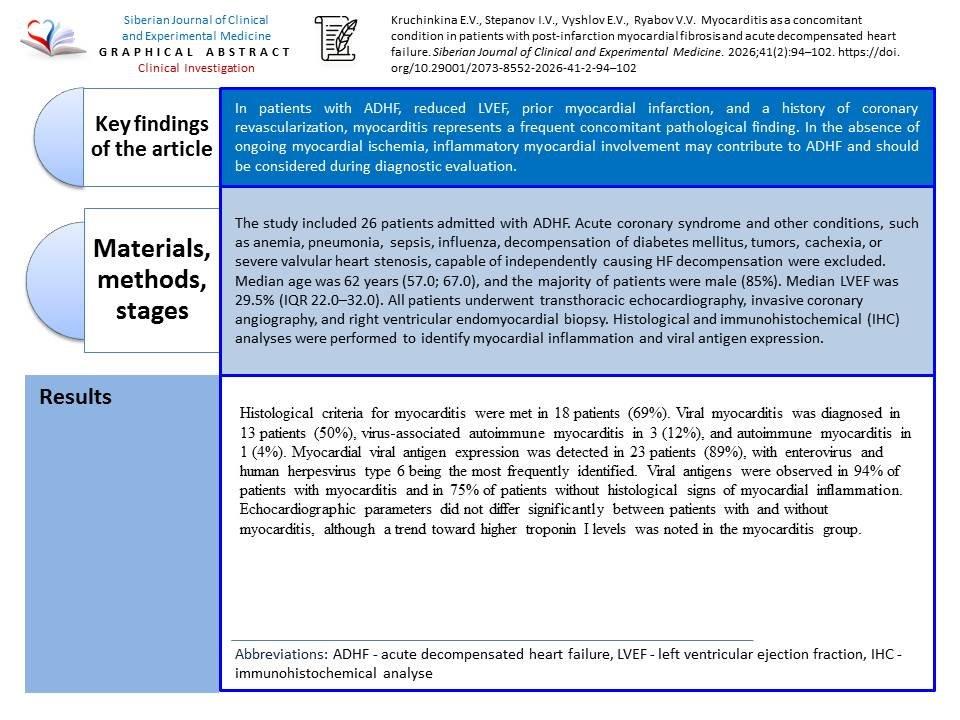
Background. Acute decompensated heart failure (ADHF) in patients with post-infarction cardiosclerosis, even with previously performed optimal coronary revascularization, is typically considered a manifestation of ischemic heart disease progression. However, in clinical practice acute decompensation can also be influenced by non-ischemic mechanisms, including myocarditis. Such a combination of conditions appears particularly significant in patients with reduced left ventricular ejection fraction (LVEF) and a history of coronary revascularization in the absence of signs of ongoing myocardial ischemia.
Aim: To assess the prevalence of myocarditis and myocardial viral antigen expression in patients hospitalized with ADHF, reduced LVEF, post-infarction myocardial fibrosis, and a history of coronary revascularization.
Material and Methods. The study included 26 patients admitted with ADHF. Acute coronary syndrome and other conditions, such as anemia, pneumonia, sepsis, influenza, decompensation of diabetes mellitus, tumors, cachexia, or severe valvular heart stenosis, capable of independently causing HF decompensation were excluded. Median LVEF was 29.5% (IQR 22.0–32.0). All patients underwent transthoracic echocardiography, invasive coronary angiography, and right ventricular endomyocardial biopsy. Histological and immunohistochemical (IHC) analyses were performed to identify myocardial inflammation and viral antigen expression. Endomyocardial biopsy of the right ventricle was performed, with three myocardial samples obtained from each patient, followed by pathohistological and immunohistochemical examination.
Results. Myocarditis was diagnosed in 18 patients (69%), including viral myocarditis in 13 (50%), viral-autoimmune myocarditis in 3 (12%), and autoimmune myocarditis in 1 patient (4%). Viral antigen expression in the myocardium was detected in 89% of cases. The frequency of viral antigen detection was as follows: enterovirus – 77%, human herpesvirus type 1 – 8%, type 2 – 8%, type 6 – 50%, Epstein-Barr virus – 23%, cytomegalovirus – 8%; parvovirus B19 and adenovirus were not detected. Viral antigen expression was observed in 94% of patients with myocarditis (except for one case of autoimmune myocarditis) and in 75% of patients without histological signs of myocardial inflammation.
Conclusion. In patients with ADHF, reduced LVEF, post-infarction cardiosclerosis, and a history of coronary revascularization, myocarditis was detected in 69% of cases and represented a frequent comorbid condition. In the absence of myocardial ischemia, inflammation of the myocardium may contribute to the development of ADHF, which should be considered during diagnostic evaluation.
Currently there is no clear evidence regarding the influence of gender on the effectiveness of catheter ablation (CA) in patients with atrial fibrillation (AF). The insufficient understanding of predictors of long-term CA outcomes necessitates further analysis of gender-specific characteristics.
Aim: To identify predictors of late AF recurrences after CA in male and female patients.
Material and Methods. This prospective study included 192 patients with symptomatic nonvalvular AF (116 men and 76 women; mean age 59.0 ± 6.7 years), predominantly with paroxysmal AF (78%). All patients underwent clinical and laboratory evaluation, including measurement of NT-proBNP, growth differentiation factor-15 (GDF-15), and soluble suppression of tumorigenicity-2 (sST2), as well as transthoracic and transesophageal echocardiography to exclude left atrial (LA) thrombosis. Electroanatomical mapping of the LA was performed in all patients with assessment of the area of low-voltage zones (LVZ), followed by radiofrequency circumferential pulmonary vein isolation. Prospective follow-up after the procedure was conducted at 3, 6, 12, and 18 months after completion of a 90-day blanking period.
Results. The median follow-up duration was 14.0 (5; 36) months. The incidence of late AF recurrences did not differ between men and women (35.6% vs. 32.9%, p = 0.755). In men, late recurrences were associated with a history of myocardial infarction (p = 0.042), sST2 levels > 36 ng/mL (p = 0.034), and early AF recurrences (p < 0.001). In women, significant predictors included left ventricular (LV) end-diastolic volume index (p = 0.001), LV end-systolic volume index (p = 0.008), higher functional class of chronic heart failure (p = 0.026), and early AF recurrences (p = 0.024). According to Kaplan–Meier analysis, early AF recurrences were an unfavorable prognostic factor in both sexes; additionally, in women, an LV end-systolic volume index > 16 mL/m² and LA LVZ area > 20% were associated with worse outcomes, whereas in men, sST2 levels > 36 ng/mL were prognostically unfavorable.
Conclusion. The study demonstrated significant sex-specific differences in predictors of late AF recurrences after primary CA. In women, markers of structural remodeling of the left heart chambers (increased LV end-systolic and end-diastolic volume indices, larger LA LVZ area) and clinical manifestations of heart failure play. But in men, sST2 levels above the threshold of 36 ng/mL are of primary importance. Early AF recurrences during the blanking period represent a common predictor of reduced freedom from AF in both sexes.
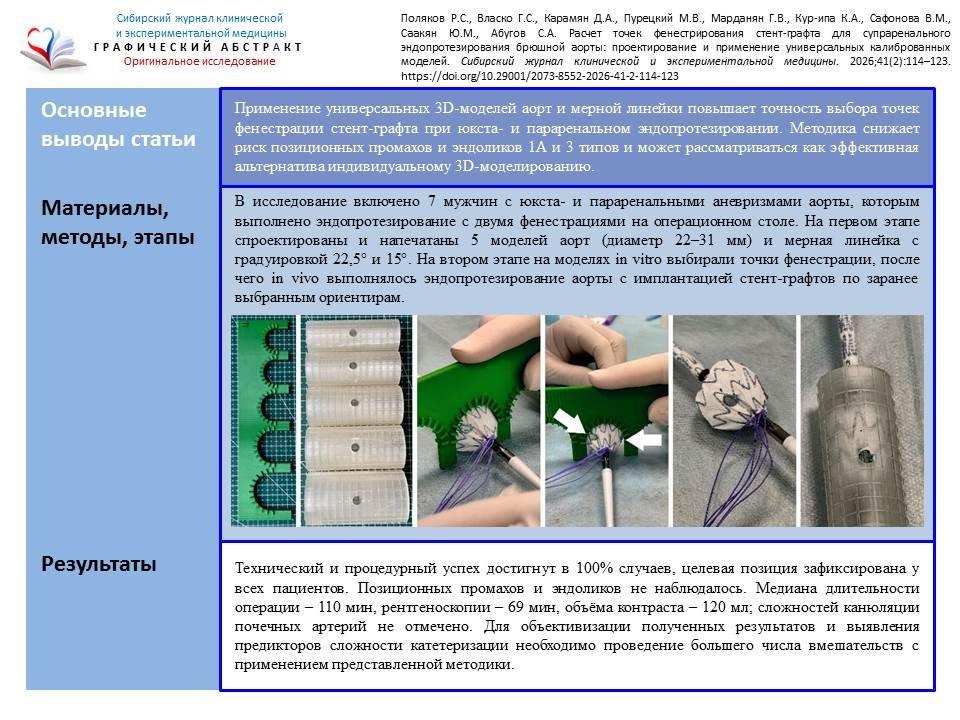
Background. Fenestrated abdominal aortic repair is a minimally invasive solution in the treatment of juxtarenal aneurysms and pararenal aneurysms. After fenestration, the success of renal branch catheterization depends on the correct positioning of the stent-graft relative to the artery mouth. At the same time, with more fenestrations the success of arterial catheterization depends on the exact alignment of fenestras. The article suggests methods for determining endograft fenestration points for fenestrated abdominal aortic repair of Juxtarenal aneurysms and pararenal aneurysms using universal models with a dimensional grid and a measuring ruler printed on a 3D printer. The proposed approaches, both individually and together, can increase the accuracy of selecting points for endograft fenestration, which may improve the results of Fenestrated abdominal aortic repair Juxtarenal aneurysms and pararenal aneurysms.
Aim: To assess the effectiveness of fenestration of an endovascular prosthesis using additional universal devices (universal aortic models and a measuring ruler) to select the fenestration point during endovascular prosthetics of abdominal aortic aneurysms with juxtarenal and pararenal localization.
Material and Methods. Aortic models with a dimensional grid and a measuring ruler were designed, followed by the production of models and rulers with 3D printing. The study involved 7 male patients with juxtarenal and pararenal abdominal aortic aneurysms who underwent primary elective endovascular aortic repair using fenestration on the operating table (performing 2 fenestration) using aortic models and an stent-graft measuring ruler.
Results. Technical and procedural success is achieved in 100% of cases. The target or close to the target position was achieved in all patients. There were no positional errors. No endoliths of types 1A and 3 were registered. There were no difficulties in cannulation and endograft insertion into the renal arteries.
Conclusion. The technology of endograft fenestration using additional universal tools (universal models, measuring ruler) for selecting fenestration points in juxtarenal and pararenal endovascular repair can be considered an effective, cost-efficient alternative, offering the potential to reduce waiting times for intervention in patients at high risk of aneurysm rupture.
Introduction. Metabolic diseases negatively impact the structure and function of skeletal muscle. Myosteatosis developing in type 2 diabetes mellitus and obesity is considered a marker of sarcopenia. Among known imaging methods, skeletal muscle ultrasound is the most accessible and safe method for qualitative and quantitative assessment.
Aim: To assess the qualitative and quantitative parameters of ultrasound examination of skeletal muscles in patients with metabolic diseases and healthy patients over 45 years of age.
Material and Methods. A total of 68 patients (52 women, 16 men) over 45 years of age were included in this study. Among them, 52 patients had metabolic diseases, and 16 controls did not. All patients underwent ultrasound examination of the skeletal muscles of the lower extremities.
Results. Skeletal muscles in patients with metabolic diseases showed the following changes compared to the control group: the rectus femoris was characterized by decreased pennation angle, anatomical cross-sectional area (CSA), physiological CSA, and muscle volume. The medial head of the gastrocnemius was characterized by a decrease in physiological CSA. The tibialis anterior muscle had higher echointensity values in the metabolic disease group (p < 0.05). Patients with metabolic diseases showed stable, directly proportional relationships between the parameters of the studied muscles: height and anatomical CSA; body mass index (BMI) and stiffness; and an inversely proportional relationship between age and anatomical CSA (p < 0.05). The control group was characterized by a directly proportional relationship between anatomical CSA and grip volume and strength; and an inversely proportional relationship between the stiffness coefficient and age (p < 0.05).
Conclusions. Ultrasound examination of skeletal muscles has a wide range of capabilities that allow determining the qualitative and quantitative characteristics of skeletal muscles.
Introduction. Surgical treatment of mitral valve diseases remains one of the priority tasks in modern cardiac surgery. The standard access, median sternotomy, provides wide visualization of the operative field but is associated with a high risk of postoperative complications. A promising alternative is the minimally invasive right thoracotomy approach, which reduces trauma while maintaining adequate conditions for the procedure.
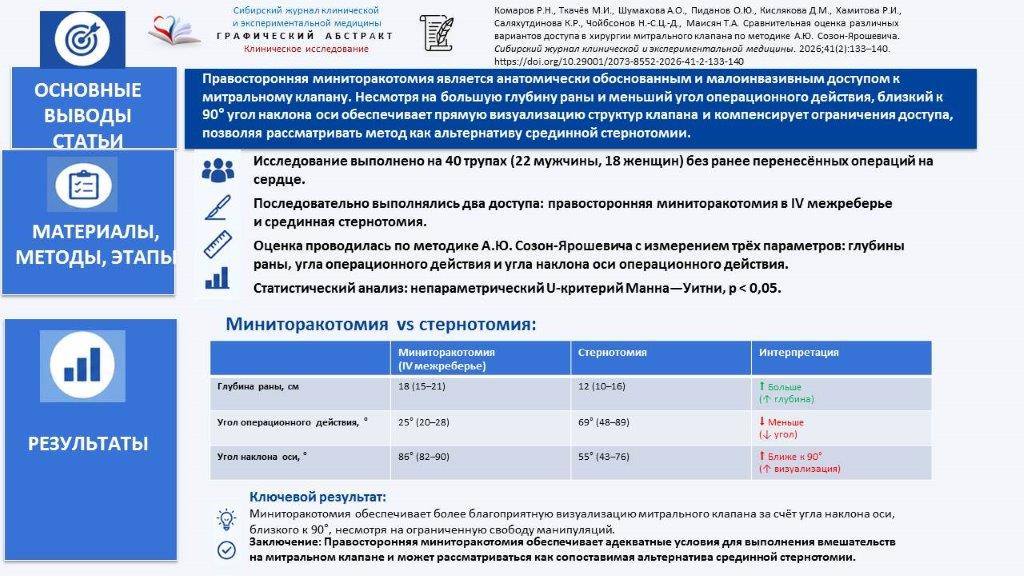
Aim: To evaluate and compare the anatomical and surgical characteristics of two access methods to the mitral valve—median sternotomy and right thoracotomy – using the A.Yu. Sozon-Yaroshevich method.
Material and Methods. The study was conducted at the Department of Pathological Anatomy of the State Clinical Hospital of the Presidential Affairs Department of the Russian Federation. A right mini-thoracotomy in the fourth intercostal space and a median sternotomy were performed sequentially on 40 cadavers with no previous open-heart surgery. Using the A.Yu. Sozon-Yaroshevich method, measurements were taken based on three criteria: wound depth, angle of surgical action, and angle of inclination of the surgical axis.
Results. The study included 22 men and 18 women. The average height of the cadavers was 176 ± 10 cm, and the average body weight was 86 ± 14 kg. The wound depth for thoracotomy was 18 (15–21) cm, which was significantly greater than the corresponding measurement for sternotomy, which was 12 (10–16) cm (p < 0.05). The surgical action angle for thoracotomy was 25 (20–28)°, while for sternotomy, it was 69 (48–89)° (p < 0.05). Despite the more limited access parameters in thoracotomy, according to the A.Yu. Sozon-Yaroshevich method, it allows adequate performance of mitral valve interventions.
Conclusion. Right thoracotomy in the fourth intercostal space is a minimally invasive and effective approach for mitral valve surgery. It provides sufficient conditions for performing valve repair and replacement and can be considered a comparable alternative to median sternotomy.
Introduction. Systolic blood pressure (SBP) time in target range (TTR) is a predictor of cardiovascular outcomes. However, data on long-term TTR after renal denervation (RDN) and its association with neuroendocrine parameters in patients with resistant hypertension (RHTN) are lacking.
Aim: To assess the association between SBP time in the target range after RDN, based on over 3 years of follow-up, and the neurohormonal profile indicators in patients with RHTN.
Material and Methods. Data from 89 patients with RHTN who completed ≥ 3 years of follow-up after RDN (median 5 years, range 3–9 years) from studies NCT01499810 and NCT02667912 were analyzed. Standard examination, including 24-hour ambulatory blood pressure (BP) monitoring, was performed. A biomarker panel of neurohormonal parameters (renin, angiotensin II, aldosterone, NT-proBNP, BNP, metanephrines and normetanephrines) was studied by ELISA; erythrocyte membrane beta-adrenoreactivity (β-AR) was measured using the β-AR-AGAT kit.
Results. After RDN, a significant reduction in clinical and 24-hour BP was observed (p < 0.01 for both). Mean TTR reached 29%. The frequency of TTR < 25% was 46%; 25–49% – 26%; ≥ 50% – 28%. Patients with TTR ≥ 50% had not only initially higher levels of metanephrines, normetanephrines and natriuretic peptides (p < 0.05), but also a significant reduction in these markers after RDN, more pronounced than in other groups (p < 0.05). The TTR ≥ 50% group also had higher baseline aldosterone levels (p = 0.022) and lower β-AR values (p = 0.12), with a more pronounced increase in β-AR (p = 0.03) and a decrease in 24-hour SBP variability (p = 0.02) after RDN. In patients with a decrease in catecholamines after RDN compared to those with an increase, mean TTR was 7 times higher (50% vs. 7.14%, respectively, p = 0.016).
Conclusion. The association between the duration systolic blood pressure (SBP) time in target range after renal denervation and the baseline state of sympathoadrenal activity in patients with resistant hypertension suggests that correction of the neurohormonal profile may be one of the key mechanisms of the therapeutic action of this intervention.
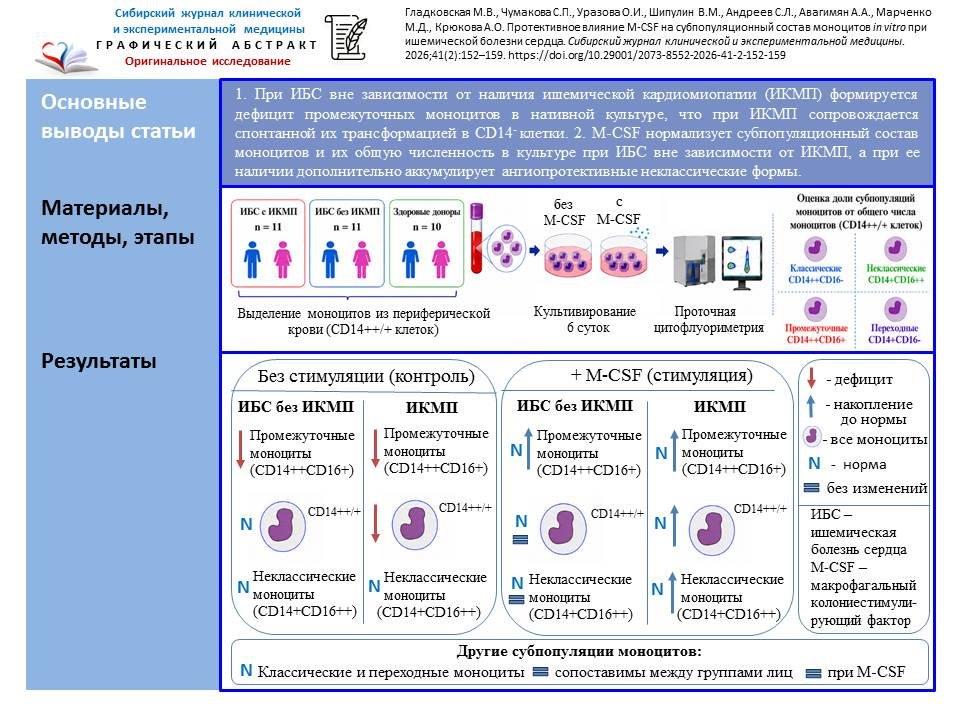
Background. Coronary artery disease (CAD) is characterized by abnormalities in the subpopulation composition of blood monocytes, which has specific features in ischemic cardiomyopathy (ICM), but its regulation by lineage-specific M-CSF has not been studied.
Aim: To determine the nature of changes in monocyte numbers and their subpopulation composition in vitro in the presence of M-CSF in patients with CAD, both with and without ICM.
Material and Methods. 22 patients with CAD (11 with ICM and 11 without ICM) and 10 healthy donors were examined. Their monocytes were cultured for 6 days with and without the addition of 50 ng/ml M-CSF. In both samples, flow cytometry was used to assess the proportion of classical CD14++CD16–, intermediate CD14++CD16+, non-classical CD14+CD16++, and transitional CD14+CD16– forms relative to the total number of monocytes (CD14++/+ cells).
Results. In patients with coronary artery disease (CAD), regardless of ICM, the proportion of intermediate forms (and, in ICM, the total number of CD14++/+ cells) in native monocyte culture is reduced relative to healthy individuals. M-CSF inhibits the decline of intermediate monocytes in in vitro cell culture in patients with CAD, both with and without cardiomyopathy. In ICM, this is accompanied by an increase (to normal) in the proportion of non-classical cells and the total number of monocytes in the culture.
Conclusion. M-CSF in CAD normalizes the subpopulation composition and number of monocytes in vitro, which is impaired to a greater extent in patients with ICM, in whom non-classical and intermediate forms exhibit increased sensitivity to it.
Background. Among circulatory system diseases (CSD), coronary artery disease (CAD) is the most significant one and remains one of the leading causes of death. Coronary artery bypass grafting (CABG) is the primary method of treatment for multivessel coronary artery disease. Complications in the postoperative period in cardiac patients could be associated with smoking.
Aim: To evaluate the risk and incidence of in-hospital complications in patients undergoing open revascularization based on their smoking status.
Material and Methods. The study included 381 patients who underwent CABG. Based on smoking status, patients were divided into three groups. The first group included 178 (46.7%) patients who have ever smoked (107 (60.1%) current smokers and 71 (39.1%) former smokers). The second group included 203 (53.3%) patients who had never smoked. The groups were comparable in terms of main clinical and anamnestic data and the severity of coronary bed lesion.
Results. Analysis of the perioperative period showed that the median duration of mechanical ventilation was longer by 112 minutes (p = 0.01) in ever-smokers compared to never-smokers. In the early postoperative period, ever-smokers demonstrated a 1.5 times higher total complication rate (40.4% vs. 26.6%, p < 0.001), a 2.5 times higher rate of healthcare-associated infections (16.3% vs. 6.4%, p < 0.001)—primarily due to a greater number of surgical site infections (14% vs. 2.5%, p < 0.001)—and a higher rate of hemorrhagic complications (6.7% vs. 0.9%, p < 0.001) compared to non-smokers. Conversely, never-smokers had a statistically significantly higher incidence of lower respiratory tract infections and hydrothorax (3.4% vs. 0.6%, p = 0.05 and 5.4% vs. 0.6%, p = 0.01, respectively). Smoking was associated with a 1.9-fold increased odds of stroke (OR 1.9; 95% CI: 1.4–8.2; p = 0.037), a 1.4-fold increase in healthcare-associated infections (OR 1.4; 95% CI: 1.5–8.1; p = 0.043), and all types of complications (OR 1.4; 95% CI: 1.1–3.4; p = 0.044).
Conclusion. Smoking is an adverse prognostic factor for the early postoperative period in patients undergoing open myocardial revascularization. Ever-smokers with stable IHD demonstrate a worse profile of postoperative complications. Both past and present smoking are associated with an increased risk of stroke, healthcare-associated infections, and the total number of developed complications.
Background. Early-onset neonatal sepsis (EONS) remains a leading cause of neonatal morbidity and mortality, particularly in low-resource settings. Maternal inflammation may play a crucial role in priming the neonatal immune response. This study investigated the predictive value of maternal and neonatal inflammatory biomarkers for neonatal sepsis.
Aim: To evaluate the predictive value of maternal and umbilical cord inflammatory biomarkers for early detection of early-onset neonatal sepsis.
Materials and Methods. A total of 117 mother-infant pairs comprising 82 neonates with sepsis and 35 non-septic neonates were enrolled. Maternal venous blood was collected at 37–39 weeks of gestation and umbilical cord blood at delivery. C-reactive protein (CRP), procalcitonin (PCT), interleukin-1β (IL-1β), interleukin-6 (IL-6), and tumour necrosis factor-α (TNF-α) were quantified using ELISA. Neonates were monitored for 28 days for clinical or culture-confirmed sepsis. Diagnostic performance of biomarkers was assessed using ROC-analysis in one-factor models of logistic regression.
Results. Maternal and cord levels of CRP, PCT, IL-6, and TNF-α were significantly higher among neonates who developed EONS compared to non-septic infants. Maternal CRP and IL-6 demonstrated strong predictive ability, while cord CRP and PCT showed excellent diagnostic quality (AUC 0.90 and 0.88, respectively). Multivariate analysis identified maternal CRP and ANC visits in EONS.
Conclusion. Maternal and umbilical cord inflammatory markers, especially CRP and IL-6, provide clinically useful early indicators of EONS risk. Integrating maternal biomarker screening into routine antenatal assessment may facilitate earlier detection and intervention in resource-limited neonatal care settings.
Background. The T1565C (dbSNP ID: rs5918) polymorphism of the integrin gene (ITGB3) is a risk factor for many diseases such as coronary heart disease (CHD), venous thrombosis, and oncology.
The minor allele C is known to alter aspirin sensitivity and increase platelet aggregation, which may affect the incidence of cardiovascular complications after elective percutaneous coronary interventions (PCI).
Aim: To study the association of the T1565C (rs5918) polymorphism of the ITGB3 gene with clinical characteristics, anatomical features and long-term adverse events after elective PCI in patients with chronic CHD.
Material and methods. The study included 364 patients with chronic CHD from a registry of elective PCI performed at the Research Institute of Cardiology of the Tomsk National Research Medical Center from 2010 to 2017. The association of polymorphic variants of rs5918 of the ITGB3 gene with long-term (5-year) adverse events was assessed using genotype frequency analysis and odds ratio (OR). Adverse events included death from cardiovascular and other causes, myocardial infarction (MI), stroke (CVA), and concomitant oncological diseases.
Results. The genotype frequencies were: TT – 69.2%, TC – 28%, CC – 2.8%. The frequencies of T and C alleles were 83.2% and 16.8%. The presence of the T allele was associated with concomitant carbohydrate metabolism disorders in patients (OR = 1.502; CI [1.005–2.247]; S = 0.205; p = 0.047). The Charlson comorbidity index was higher in the group of carriers of the minor homozygous CC genotype compared to carriers of the T allele (TC + TT groups) (Me (Q1–Q3); 4(3–5) vs 3(2–4), respectively, p = 0.025). No association was found between the rs5918 polymorphism of the ITGB3 gene and late adverse cardiovascular events and death from all causes. In the presence of the minor homozygous CC genotype, the chances of concomitant oncological diseases significantly increase (OR = 5.750; CI [1.359–24.335], S = 0.736, p = 0.035).
Conclusion. The rs5918 polymorphism of the ITGB3 gene is associated with phenotype-specific characteristics of patients with chronic coronary artery disease who are eligible for elective PCI. These characteristics include varying degrees of comorbidity (as measured by the Charlson index), the frequency of carbohydrate metabolism disorders and cancer, as well as the severity and location of coronary lesions, which may impact the completeness of revascularization and the long-term prognosis of these patients.
EXPERIMENTAL STUDIES
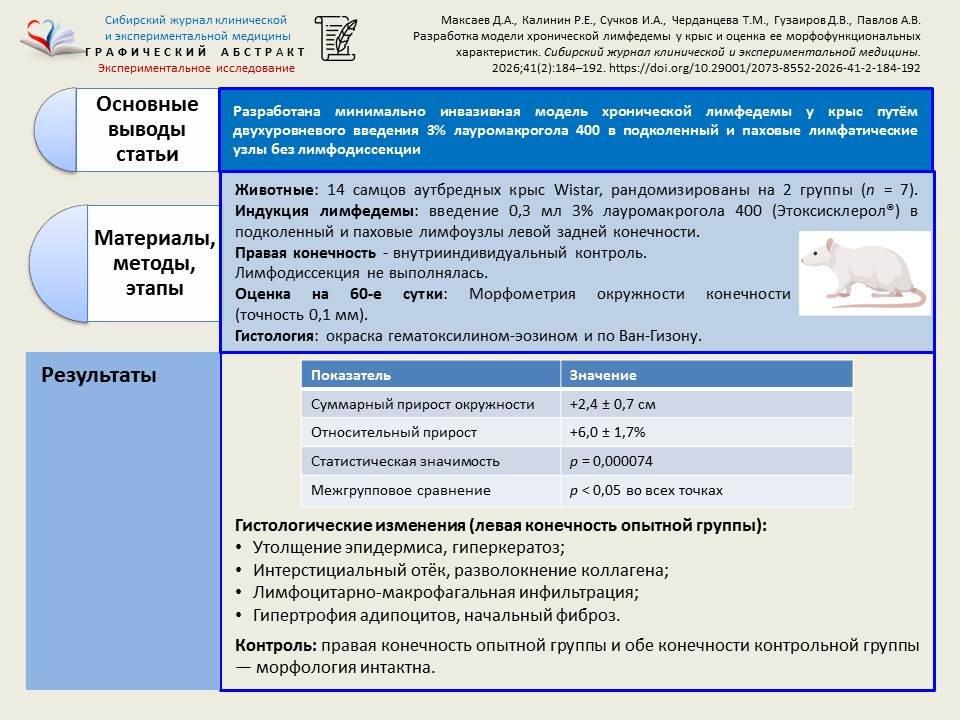
Aim: To develop a minimally invasive model of chronic lymphedema in the hind limb of rats by injecting a detergent solution into lymph nodes without performing lymph node dissection and to evaluate its morphofunctional characteristics.
Material and Methods. The experiment was conducted on 14 male outbred Wistar rats divided into experimental (n = 7) and control (n = 7) groups. In the experimental group, 0.3 mL of 3% lauromacrogol 400 was injected into the popliteal and inguinal lymph nodes of the left hind limb through small skin incisions without lymph node removal. The right limb served as an internal control. Assessment was performed on day 60: limb circumference was measured at 7 points, and histological examination was carried out (hematoxylin and eosin staining, Van Gieson staining).
Results. On day 60, the experimental group showed a statistically significant increase in the circumference of the left limb compared to the right limb (total increase: 2.4 ± 0.7 cm; p = 0.000074) and compared to the left limb of the control group (p < 0.05 at all measurement points). Histologically, signs of stage II–III chronic lymphedema were observed: epidermal thickening, interstitial edema, collagen fiber disorganization, lymphocyte-macrophage infiltration, adipocyte hypertrophy, and early fibrosis. The right limb of the experimental group and both limbs of the control group retained intact morphology.
Conclusion. A new minimally invasive model of chronic lymphedema in the rat hind limb has been developed with high reproducibility, morphological validity, and technical accessibility. It can be used to study the pathogenesis of fibrosis and adipogenesis in lymphedema, as well as to develop and evaluate new pharmacological approaches.
CLINICAL CASES
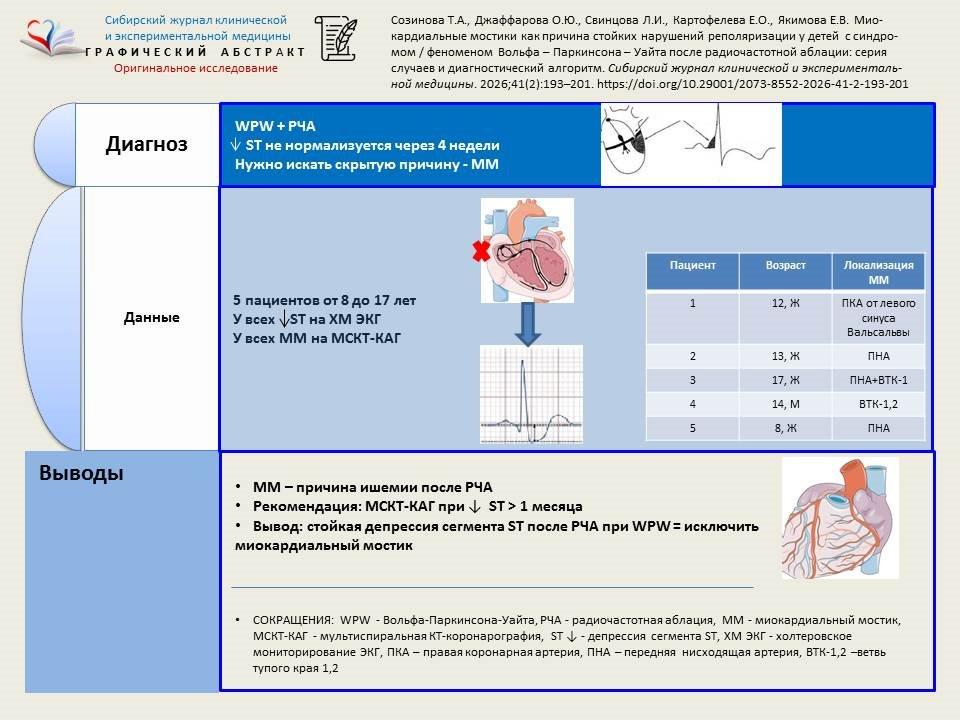
Background. Radiofrequency catheter ablation (RFCA) is the method of choice for treating patients with Wolff – Parkinson – White (WPW) syndrome. The disappearance of the delta wave is usually accompanied by the normalization of secondary repolarization abnormalities (ST-T segment changes). Persistent repolarization abnormalities after successful RFCA require investigation for other causes, such as myocardial ischemia.
Aim: To assess the potential role of myocardial bridges in the persistent repolarization abnormalities after successful radiofrequency ablation of accessory atrioventricular pathways (AAVPs) in children with WPW syndrome, using a case series, and to propose a diagnostic algorithm.
Material and Methods. We retrospectively analyzed five pediatric patients aged 8 to 17 years with WPW syndrome (n = 4) and a nodal-ventricular tract (n = 1). All patients presented persistent ST-segment depression on ECG after ablation (and at baseline in the non-ablated patient with a nodal-ventricular tract). All patients underwent a comprehensive non-invasive workup to exclude other causes of ST-segment changes, including exercise stress testing, stress echocardiography or myocardial perfusion scintigraphy, and ultimately, multislice computed tomography (MSCT)-coronary angiography (CAG).
Results. Coronary artery anomalies were identified in all five cases by MSCT-CAG: one case with anomalous origin of the right coronary artery from the left sinus of Valsalva, and four cases with myocardial bridges (MBs) (three cases involving the left anterior descending artery). Despite significant ischemic ECG changes (ST-depression up to 3.5 mm, positive exercise tests in 3/4), functional imaging (scintigraphy, stress Echo) showed no perfusion defects or wall motion abnormalities. Symptomatic patients (n = 3) were treated with a beta-blocker (bisoprolol) with symptomatic improvement in one; one patient with an anomalous coronary origin underwent surgical correction.
Conclusion. Myocardial bridges are an under-recognized cause of persistent repolarization abnormalities in children with WPW after successful RFCA. A diagnostic mismatch (positive ECG and exercise stress test findings, but negative functional imaging with MPS and stress Echo) should raise suspicion for dynamic ischemia induced by MBs. Including MSCT-CAG in the diagnostic algorithm for such patients enables accurate diagnosis and guides appropriate therapy.
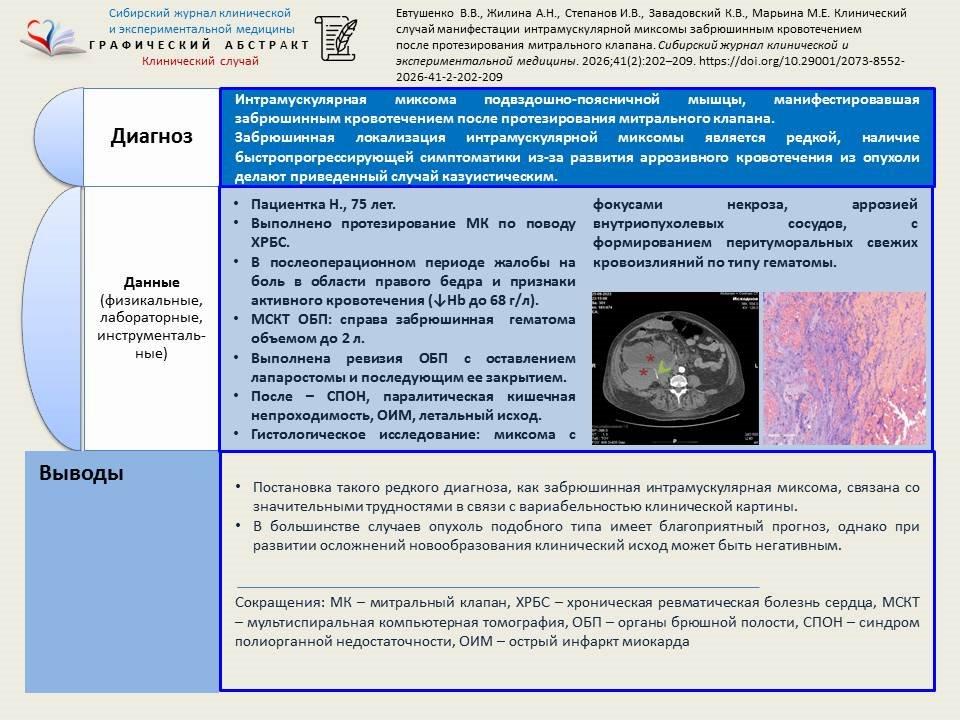
The article presents a clinical case of intramuscular myxoma with its rare location in iliopsoas muscle. The myxoma was manifested with retroperitoneal bleeding after cardiac surgery. A 75-year-old female patient was routinely admitted for surgical treatment of rheumatic mitral valve disease. Mitral valve replacement with biological prosthesis and tricuspid valve repair with use of cardiopulmonary bypass was performed. The patient had post-pericardiotomy syndrome with require thoracentesis procedures. After the second puncture, pain in the right hip appeared with a short-term response to analgesics, and a decrease in hemoglobin to 68 g/L. The patient was transferred to intensive care to rule out active bleeding. After diagnostic search retroperitoneal hematoma was detected with computed tomography. Laparotomy with exploration of peritoneal cavity and retroperitoneal space was performed twice – removed 600 ml hemorrhagic fluid with “clots” in total. The patient developed an acute myocardial infarction which required intra-aortic balloon pumps and multiple organ failure after re-laparotomy. The patient died due to disease complications. Histological examination of the intraoperative material and autopsy material confirmed the diagnosis of intramuscular myxoma. The retroperitoneal localization of intramuscular myxoma is uncommon, and described clinical case with rapidly progressive symptoms because of neoplasm bleeding is unique.
DIGITAL TECHNOLOGIES IN MEDICINE AND HEALTHCARE
Introduction. Telemedicine is becoming a powerful tool for increasing the availability and timely provision of medical care. However, many monitoring methods become unavailable due to the loss of direct contact between the doctor and the patient. All this requires new methodological approaches to the organization of diagnostics and treatment at the junction of information and communication technologies and medical sciences.
Aim: To develop a method for extracting the pulse wave from a human face video and to form a dataset using a telemedicine complex, traditional and remote photoplethysmography for artificial intelligence systems.
Material and Methods. The study included 450 practically healthy individuals who were examined using a telemedicine system, traditional and videophotoplethysmography at rest and after physical exertion. For each subject, three-minute video recordings were made from three webcams and smartphone video cameras with different resolutions, compared with a classic photoplethysmogram with a frequency of 100 Hz and vital health parameters recorded using a domestic telemedicine system.
Results. The resulting dataset contains 2,700 video files that can be used for training and testing artificial neural networks for remote photoplethysmography. Also, when collecting data, we studied the important scientific problem of synchronizing video files and photoplethysmograms for their correct comparison. To solve this problem, a new measurement coordination method based on comparing time series of measurement moments has been proposed. The results obtained were used to compare and analyze several existing pulse wave extraction algorithms using artificial neural networks in comparison with data obtained from a photoplethysmograph and a telemedicine system.
Conclusion. Based on the use of a telemedicine complex, traditional and remote photoplethysmography, a dataset has been assembled that can be used to extract physiological indicators of human health from facial video from user devices. The use of various well-known neural network computer vision algorithms has demonstrated the possibility of implementing remote photoplethysmography in medical diagnostics and health monitoring.

ISSN 2713-265X (Online)

.png)